


New imaging techniques reveal real-time lung function improvements, offering a breakthrough in diagnosing and treating respiratory diseases like asthma, COPD, and post-lung transplant complications.
By using a specialized gas visible on MRI scans, researchers can pinpoint poorly ventilated lung areas, opening new possibilities for personalized care and early intervention.
Revolutionary Lung Scanning for Real-Time Treatment Monitoring
A groundbreaking lung scanning method allows experts to observe how treatments affect lung function in real-time and provides detailed insights into the performance of transplanted lungs.
This innovative technique could help medical professionals detect declines in lung function much earlier.
Developed by a team of researchers at Newcastle University in the UK, the scan reveals how air flows in and out of the lungs during breathing. It has already been used to study patients with asthma, chronic obstructive pulmonary disease (COPD), and those who have undergone lung transplants.
Publishing two complementary papers in Radiology and JHLT Open, the team explains how they use a special gas, called perfluoropropane, which can be seen on an MRI scanner. The gas can be safely breathed in and out by patients, and then scans taken to look at where in the lungs the gas has reached.
Mapping Ventilation Patterns in Lung Diseases
The project lead, Professor Pete Thelwall is Professor of Magnetic Resonance Physics and Director of the Centre for In Vivo Imaging at Newcastle University. He said; “Our scans show where there is patchy ventilation in patients with lung disease, and show us which parts of the lung improve with treatment. For example, when we scan a patient as they use their asthma medication, we can see how much of their lungs and which parts of their lung are better able to move air in and out with each breath.”
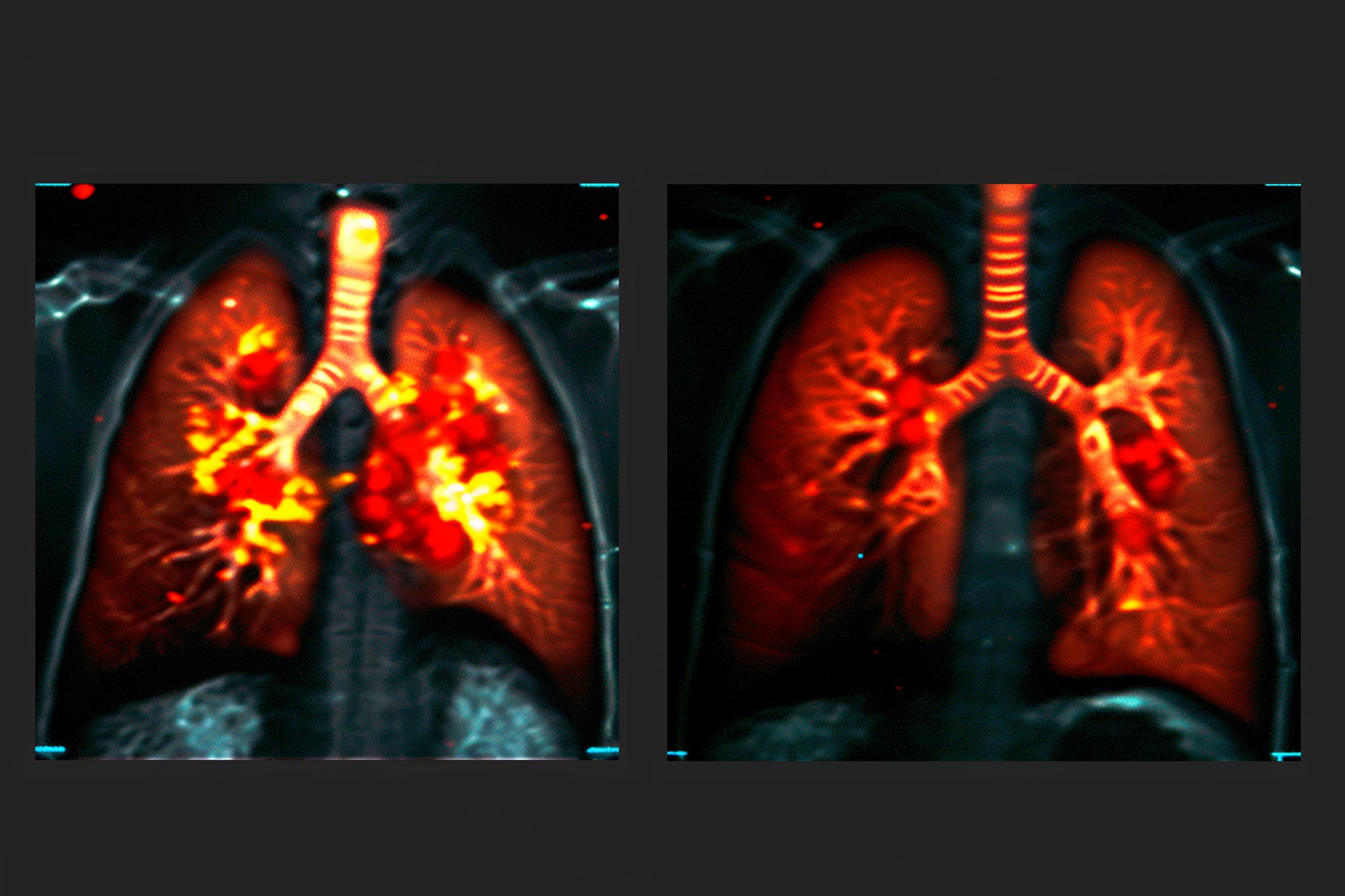
Using the new scanning method, the team is able to reveal the parts of the lung that air doesn’t reach properly during breathing. By measuring how much of the lung is well-ventilated and how much is poorly ventilated, experts can make an assessment of the effects of a patient’s respiratory disease, and they can locate and visualize the lung regions with ventilation defects.
Using the new scanning method, the team are able to reveal the parts of the lung that air doesn’t reach properly during breathing. Credit: Newcastle University, UK
Clinical Trials Highlight the Technique’s Potential
Demonstrating that the scans work in patients with asthma or COPD, the team comprising experts from across Universities and NHS Trusts in Newcastle and Sheffield published the first paper in Radiology.
The new scanning technique allows the team to quantify the degree of improvement in ventilation when patients have a treatment, in this case, a widely used inhaler, the bronchodilator, salbutamol. This shows that the imaging methods could be valuable in clinical trials of new treatments for lung disease.
Advancing Lung Transplant Monitoring
A further study, published in JHLT Open, examined patients who had previously received a lung transplant for very severe lung disease at the Newcastle upon Tyne Hospitals NHS Foundation Trust. It demonstrates how the team further developed the imaging method to provide lung function measurements which could be used to better support lung transplant recipients in the future. The sensitivity of the measurement means medics can spot early changes in lung function allowing them to identify lung problems earlier and so provide better care for patients.
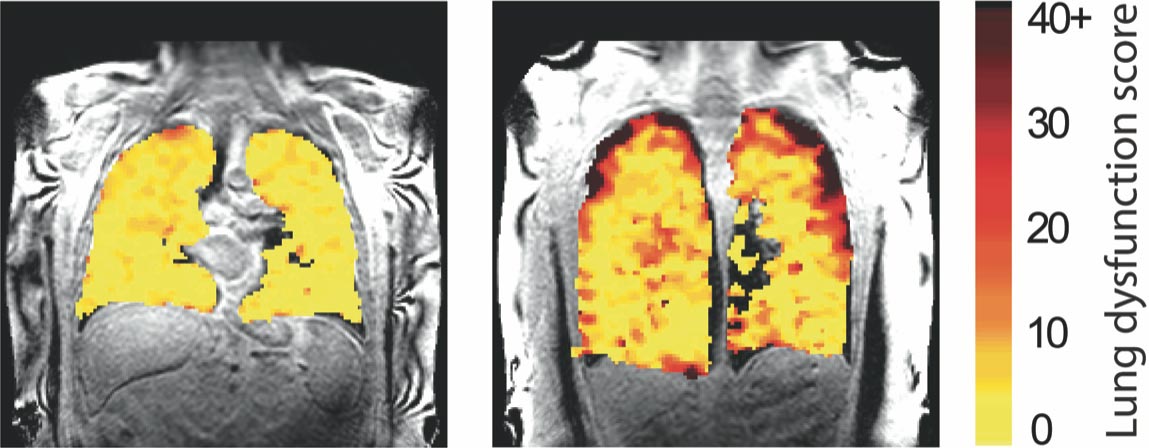
In research studies, the team scanned transplant recipients’ lungs over multiple breaths in and out, collecting MRI pictures that show how the air containing the gas reached different areas of the lung. The team scanned those who either had normal lung function or who were experiencing chronic rejection after lung transplant, which is a common issue in lung transplant recipients as their immune system attacks the donor lungs. In those with chronic rejection, the scans showed poorer movement of air to the edges of the lungs, most likely due to damage in the very small breathing tubes (airways) in the lung, a feature typical of chronic rejection also known as chronic lung allograft dysfunction.
Professor Andrew Fisher, Professor of Respiratory Transplant Medicine at Newcastle Hospitals NHS Foundation Trust and Newcastle University, UK, co-author of the study said; “We hope this new type of scan might allow us to see changes in the transplant lungs earlier and before signs of damage are present in the usual blowing tests. This would allow any treatment to be started earlier and help protect the transplanted lungs from further damage.”
Broader Applications for Lung Disease Management
The team says there is potential for this scan method to be used in the clinical management of lung transplant recipients and other lung diseases in the future, bringing a sensitive measurement that may spot early changes in lung function that enable better management of these conditions.
This work on lung imaging has been funded by the Medical Research Council and by The Rosetrees Trust.
References:
“Assessing Lung Ventilation and Bronchodilator Response in Asthma and Chronic Obstructive Pulmonary Disease with Fluorine 19 MRI” by Pippard BJ, Neal MA, Holland CW, Maunder AM, Forrest I, Lawson RA, Fisher HF, Matthews JNS, Wild JM, Simpson AJ and Thelwall, PE, 24 December 2024, Radiology.
DOI: 10.1148/radiol.240949
“Dynamic 19F-MRI of pulmonary ventilation in lung transplant recipients with and without chronic lung allograft dysfunction” by Mary A. Neal, PhD, Saskia Bos, MD, PhD, Charlotte W. Holland, MRCP, Kieren G. Hollingsworth, Gerard Meachery, FRCP, Arun Nair, MD, FRCP, James L. Lordan, FRCP, Andrew J. Fisher, FRCP, PhD and Peter E. Thelwall, PhD, 17 October 2024, JHLT Open.
DOI: 10.1016/j.jhlto.2024.100167



Discussion about this post