


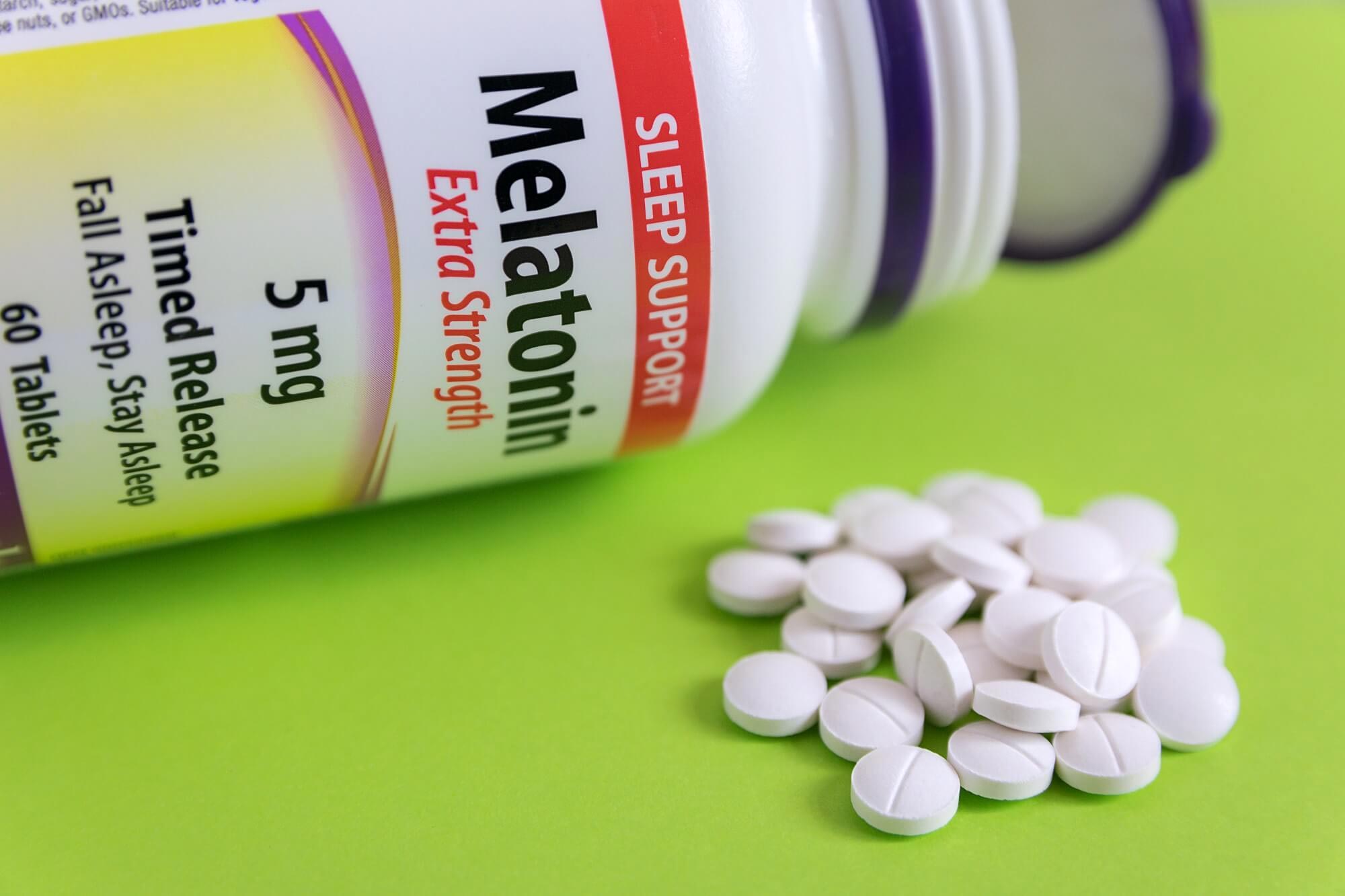
Melatonin, a hormone naturally secreted by the pineal gland, is integral to regulating the sleep-wake cycle. Scientific research supports melatonin’s efficacy as a sleep aid, especially in treating primary sleep disorders, delayed sleep phase syndrome, and jet lag. Research findings indicate that melatonin supplementation can reduce sleep latency, enhance sleep quality, and increase total sleep time.
Melatonin, a hormone regulating sleep-wake cycles, is effective in treating certain sleep disorders and improving sleep quality. However, it can cause side effects, so medical consultation is recommended before use.
Melatonin, a hormone primarily secreted by the pineal gland, has been the subject of numerous scientific studies due to its role in the regulation of sleep-wake cycles.[1] Naturally produced in response to darkness, melatonin is responsible for promoting sleep, making it an area of interest for those seeking non-pharmaceutical interventions for sleep disturbances.
Role of Melatonin in Sleep
Melatonin production is inherently linked to the body’s circadian rhythm, which governs physical, mental, and behavioral changes within a roughly 24-hour cycle.[2] It reaches peak levels during the night, thereby encouraging sleep. Melatonin’s significance lies in its ability to communicate information related to environmental light, which in turn helps regulate the sleep-wake cycle.[1]
Melatonin as a Sleep Aid
The use of melatonin as a sleep aid has been thoroughly studied and its efficacy in alleviating certain sleep disorders is backed by scientific research. It has shown to be effective in treating primary sleep disorders, delayed sleep phase syndrome, and jet lag.[3]
A review of multiple clinical trials noted that melatonin supplementation is more effective in reducing sleep latency (the time it takes to fall asleep) and increasing total sleep time compared to a placebo.[4] Moreover, the study found that melatonin appeared to improve overall sleep quality, with most participants reporting that they felt more rested after waking.
Safety and Side Effects
Generally, melatonin is considered safe for short-term use. However, like any supplement, it is not without potential side effects. Some users report experiencing headaches, dizziness, nausea, or drowsiness the next day.[5] As with any supplement or medication, it is advisable to consult with a healthcare provider before starting a regimen of melatonin, especially for those with existing medical conditions or those currently taking other medications.[6]
Conclusion
Melatonin is a vital hormone in the regulation of sleep and wakefulness. Its supplementation has shown promise in improving sleep duration, quality, and onset for those with certain sleep disorders. Although generally safe for short-term use, potential users should be aware of possible side effects and consult with a healthcare provider before initiating use. Future research should continue to investigate the long-term safety and efficacy of melatonin supplementation, as well as explore its potential uses beyond sleep regulation.
References:
- “New perspectives on the role of melatonin in human sleep, circadian rhythms and their regulation” by Nava Zisapel, 10 January 2018, British Journal of Pharmacology.
DOI: 10.1111/bph.14116 - “Melatonin, the circadian multioscillator system and health: the need for detailed analyses of peripheral melatonin signaling” by Rüdiger Hardeland, Juan Antonio Madrid, Dun-Xian Tan and Russel J. Reiter, 27 September 2011, Journal of Pineal Research.
DOI: 10.1111/j.1600-079X.2011.00934.x - “Therapeutic Actions of Melatonin in Cancer: Possible Mechanisms” by Venkataramanujan Srinivasan, PhD, D Warren Spence, MA, Seithikurippu R. Pandi-Perumal, MSc, Ilya Trakht, PhD and Daniel P. Cardinali, MD, PhD, 1 September 2008, Integrative Cancer Therapies.
DOI: 10.1177/1534735408322846 - “Meta-Analysis: Melatonin for the Treatment of Primary Sleep Disorders” by Eduardo Ferracioli-Oda,Ahmad Qawasmi and Michael H. Bloch, 17 May 2013, PLOS ONE.
DOI: 10.1371/journal.pone.0063773 - “The Safety of Melatonin in Humans” by Lars Peter Holst Andersen, Ismail Gögenur, Jacob Rosenberg and Russel J. Reiter, 21 December 2015, Clinical Drug Investigation.
DOI: 10.1007/s40261-015-0368-5 - “Effects of exogenous melatonin on sleep: a meta-analysis” by Amnon Brzezinski, Mark G. Vangel, Richard J. Wurtman, Gillian Norrie, Irina Zhdanova, Abraham Ben-Shushan and Ian Ford, 11 November 2004, Sleep Medicine Reviews.
DOI: 10.1016/j.smrv.2004.06.004



Discussion about this post